The People’s Emergency Briefing (PEB) film is an accurate reflection of the current and potential future scale of the twin climate and nature emergencies, as has been confirmed by the independent Bristol Advisory Committee on Climate Change. Members of BACCC have produced a statement with commentary on the issues raised, a fact check of the key points, as well as local context.
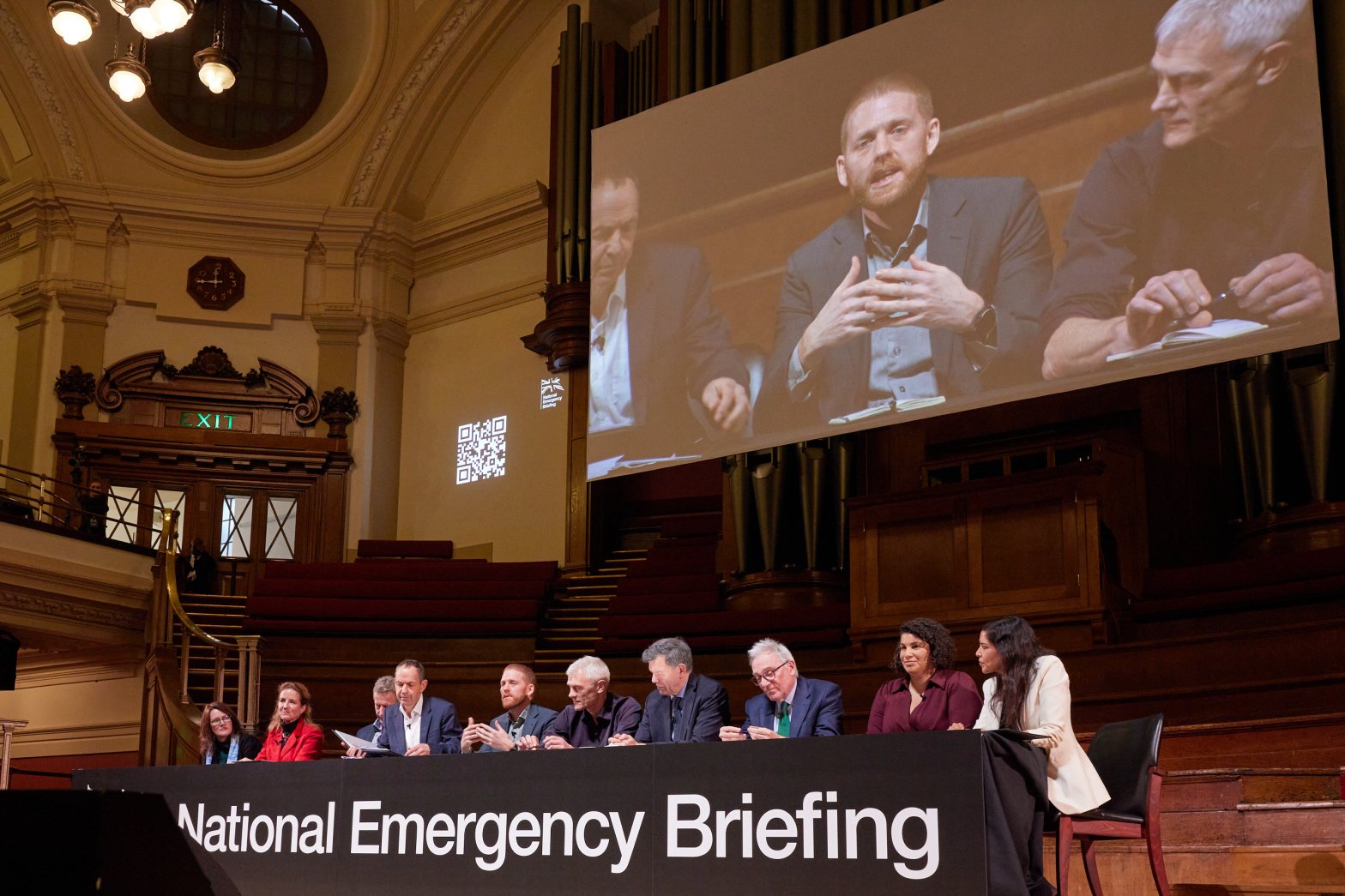
In November 2025 the National Emergency Briefing (NEB) was held to campaign for a national response by government to ensure the public is informed about, prepared and protected from the enormity of the climate crisis.
NEB calls on the government to:
- Hold a televised national emergency briefing
- Launch a science-led national emergency response.
- Help lead stronger global action.
Chaired by Chris Packham the NEB addressed nine interlinked themes:
- Nature
- Climate
- Weather Extremes
- Tipping Points
- Food Security
- Health
- National Security
- Economics
- Energy Transition
Each of these was led by an expert who provided a detailed and strongly worded argument for addressing the risks of a changing climate and identifying opportunities to mitigate emissions or adapt to the new reality.
BACCC has reviewed the NEB website and considers it to provide a clear overview of the risks posed by the changing climate and the responses that could be undertaken to mitigate some of the risks. However, BACCC notes that many of the positions outlined in the NEB are worst case outcomes and for which mitigation and adaptation measures are already beginning to reduce the risk of them being realised.
Co-Chairs Jo House (Professor of Environmental Science & Policy at University of Bristol) and Enda Hayes (Professor of Air Quality & Carbon Management at UWE Bristol) say “Climate change is already affecting everyone in Bristol to some extent through the costs of food and energy, and health impacts of flooding and heatwaves. The briefing features extreme scenarios that are now unlikely due to action underway, but more urgent progress is still needed. We already have the solutions to address these crises including many leading community, corporate and council actions in Bristol. While large scale transformation is needed, every step taken now, however small, will reduce future risks.”
The NEB has now been developed into a 50-minute People’s Emergency Briefing film, released on 7 April 2026. The purpose of this public information initiative is to ensure that the UK population is fully briefed on the climate and nature crisis. The film highlights the national implications of climate and nature breakdown, along with credible, positive responses, in a single, accessible account designed for screening in communities across the UK. Its purpose is to support informed democratic discussion and ensure that Parliament and the public share a common understanding of the scale and urgency of the challenge.
BACCC has discussed the key points raised by the NEB and finds that the briefing is largely supported by the evidence base and that where the evidence is less robust or further work is needed, BACCC finds that the approach proposed is consistent with the application of the precautionary principle of environmental law. The principle requires that where there are threats of serious or irreversible damage, scientific uncertainty should not be used as a reason to postpone cost-effective measures to prevent this.
Download the full statement for a fact check of the key points in each of the nine themes covered in the NEB, and a localisation to Bristol of potential climate and nature risks and the opportunities that exist to mitigate or adapt to these risks.
Find a People’s Emergency Briefing screening near you.
Please note, members of BACCC join in an individual capacity however, the organisations in which some members are employed do not allow engagement with policy or activities that might be construed as campaigning. Consequently, some members of BACCC have been unable to participate in the development of this statement or in the Fact Check process.

